LIRA, a pioneer in astrophysics and instrumentation, pushes back the frontiers of knowledge
LIRA
Laboratory for Instrumentation and Research in Astrophysics
LENS: LIRA – Weekly Highlight
Credits: Raphaël de Assis Peralta
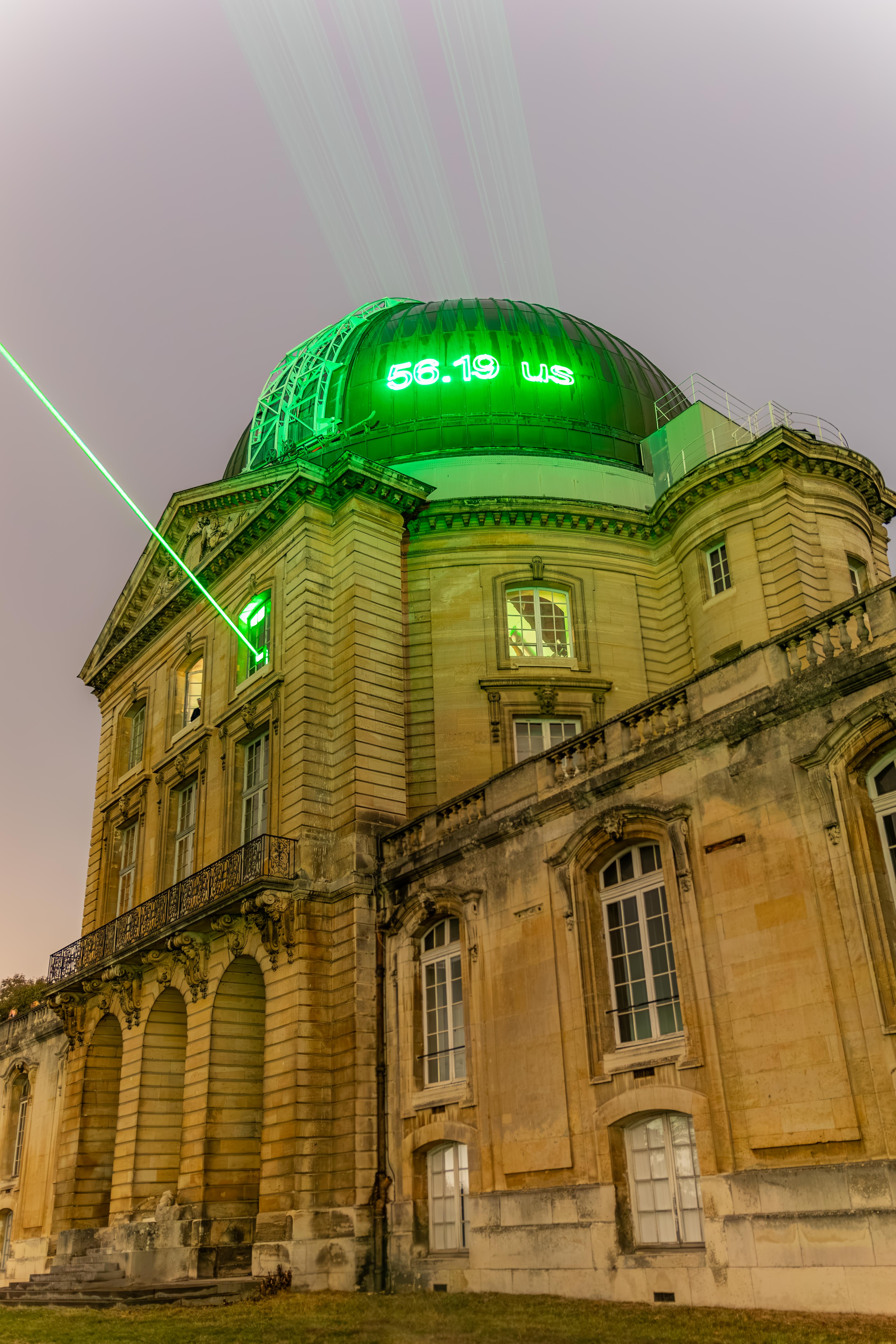
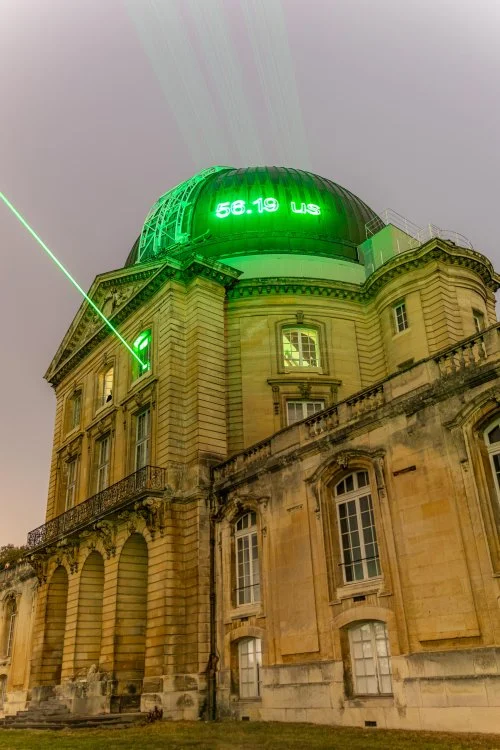
A laser to link Paris and Meudon!
12 October 2026To mark the 100th anniversary of the merger of the Paris and Meudon observatories, the Paris Observatory – PSL organised an original experiment: sending a green laser beam to symbolically link the domes of its two historic sites!
Starting from Meudon, the beam travelled across the sky to the Arago dome in Paris, before returning to its starting point. A round-trip journey of approximately 17 kilometres, covered by the light in just 56.19 microseconds! This travel time was measured live by the Observatory’s teams.
This experiment echoes a historic discovery made 350 years ago, in 1676, when the astronomer Ole Rømer demonstrated at the Paris Observatory that light travels at a finite speed. An event at the crossroads of history, science and heritage.
SEMINAR Monday 19 October 2026 11:00
Séminaires du pôle Étoiles et Galaxies Studying the centre to limb intensity variation of stars across the HR diagram
Séminaires du pôle Étoiles et Galaxies Studying the centre to limb intensity variation of stars across the HR diagram
SEMINAR Thursday 22 October 2026 11:00
Séminaires du pôle Étoiles et Galaxies Using Stellar Chemistry and Phase-Space Distribution to Constrain Galactic Potential Parameters & Accretion History
Séminaires du pôle Étoiles et Galaxies Using Stellar Chemistry and Phase-Space Distribution to Constrain Galactic Potential Parameters & Accretion History
SEMINAR Friday 30 October 2026 11:00
Séminaires du pôle Systèmes Exoplanétaires A Multi-Epoch VLT/SPHERE Protoplanetary Disk Imaging Survey — SAFFRON
Séminaires du pôle Systèmes Exoplanétaires A Multi-Epoch VLT/SPHERE Protoplanetary Disk Imaging Survey — SAFFRON
News

Institutional news
7 October 2026
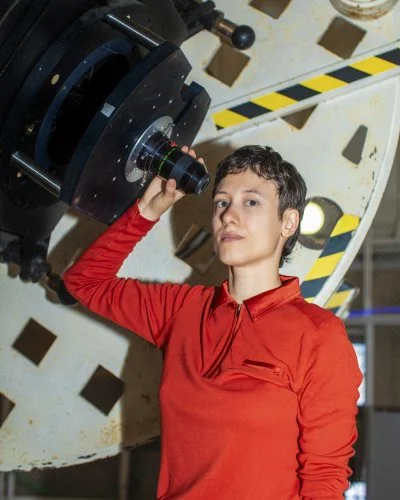
Irène Urso, winner of the 20th L’Oréal-UNESCO ‘For Women in Science’ Award, France
Scientific news
6 October 2026
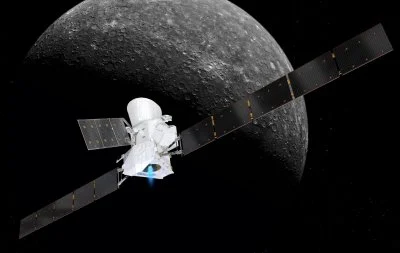
BepiColombo opens its eyes: first image from the SIMBIO-SYS instrument

Institutional news
24 September 2026
Athena Coustenis receives the 2026 AGU Charles A. Whitten Medal

Scientific news
15 September 2026
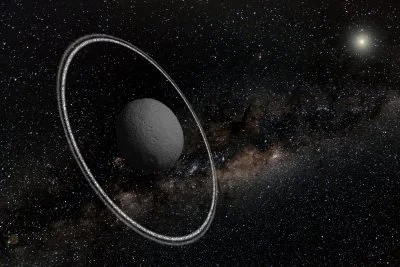
The James Webb Space Telescope reveals that Chariklo’s invisible rings are changing

Presentation
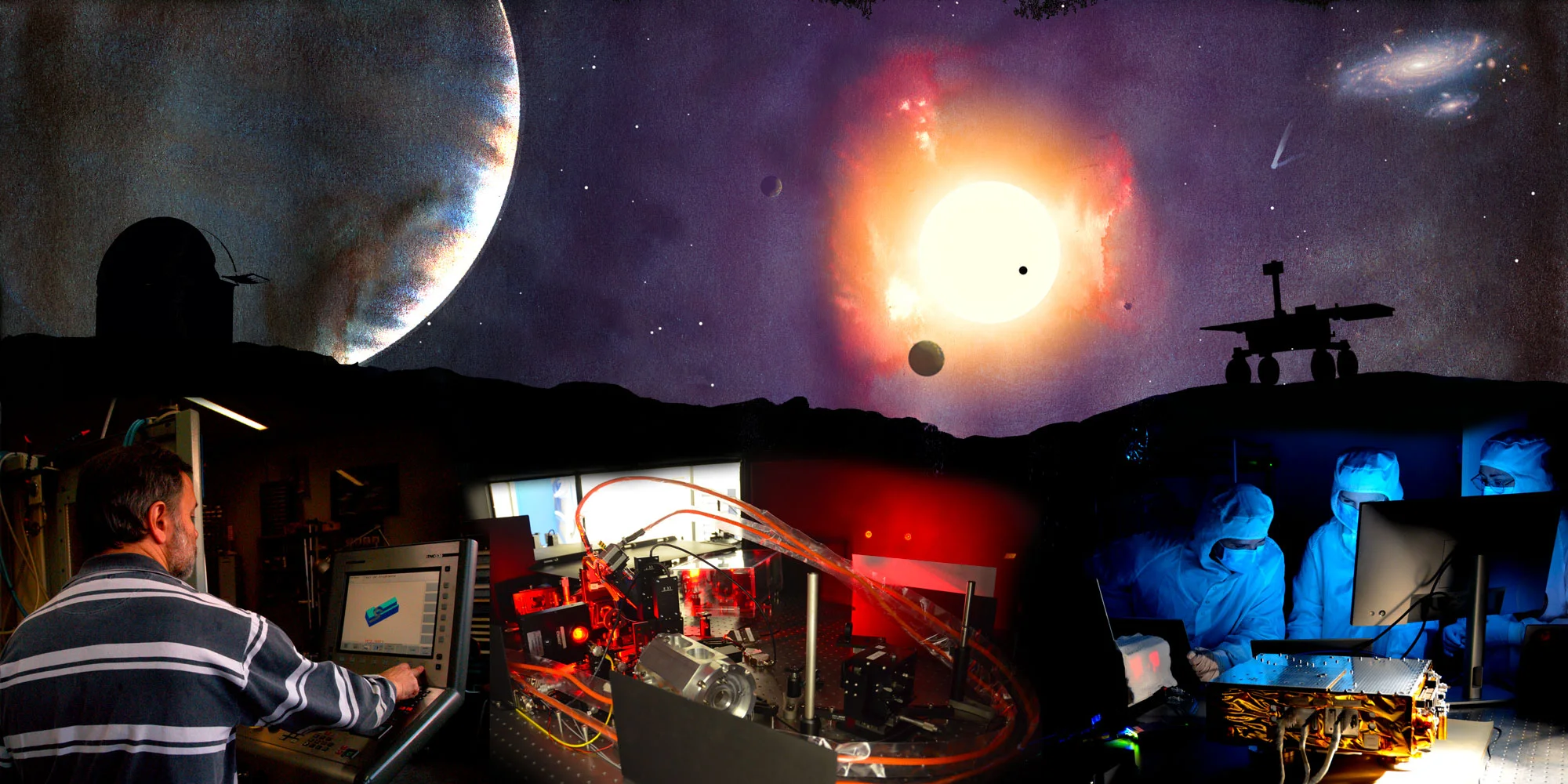
LIRA, a CNRS joint research unit at Paris Observatory, is a laboratory of excellence in astrophysics and instrumentation. It studies astrophysical objects, from the Solar System to our Galaxy and beyond, through five thematic areas. Through international collaboration and instrumental innovation, it pushes back the frontiers of science and contributes to the training and dissemination of knowledge.
Our projects
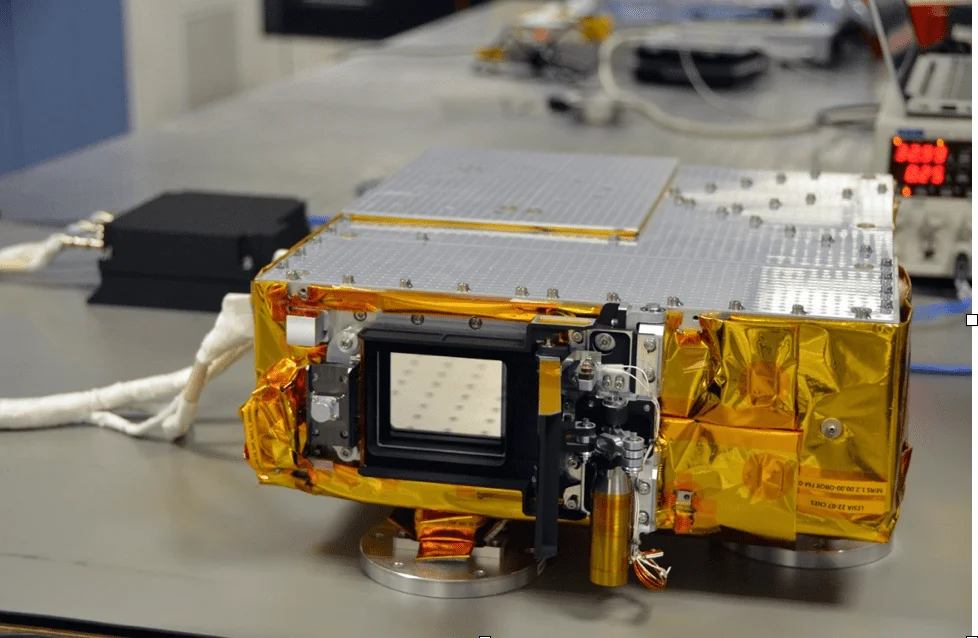
MIRS on the JAXA MMX mission
The Martian Moons eXploration (MMX) mission of JAXA (Japan Aerospace Exploration Agency) is the first sample-return mission from the Phobos satellite. It also includes an exploration of the Martian system. The mission’s primary objective is to decipher the origin of Martian moons, which will provide important information on planet formation and the conditions for the emergence of water on Earth-like planets.
The MIRS (MMX InfraRed Spectrometer) instrument, developed under the leadership of LESIA (now LIRA), is an imaging spectrometer that will characterize the composition of the Martian system and help select candidate sites for sample collection.

GRAVITY+
The GRAVITY instrument, installed on the European Southern Observatory’s Very Large Telescope Interferometer (VLTI/ESO), has produced spectacular and transformative results on the supermassive black hole at the centre of the Milky Way, the active nuclei of other galaxies, proto-planetary disks around young stars and exoplanets. GRAVITY+ aims to modernise both VLTI and GRAVITY to make them ≈ 100 times more sensitive, while increasing sky coverage by a factor of ≈ 100, and contrast in the vicinity of bright objects by a factor of ≈ 10. These gains will benefit all the VLTI’s current and future instruments for the next 20 years, and will perpetuate it as a unique infrastructure in the world.
All projects
Projets en développement
Projets en exploitation
Projets passés
Contacts
Contacts
Postal address
Observatoire de Paris
5, place Jules Janssen
92195 Meudon
Phone
01 45 07 77 01
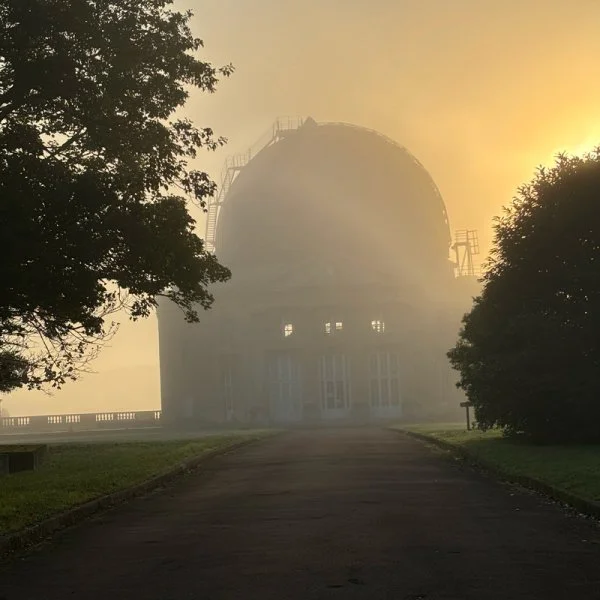
Meudon site
LIRA
Observatoire de Paris
5, place Jules Janssen
92195 MEUDON Cedex
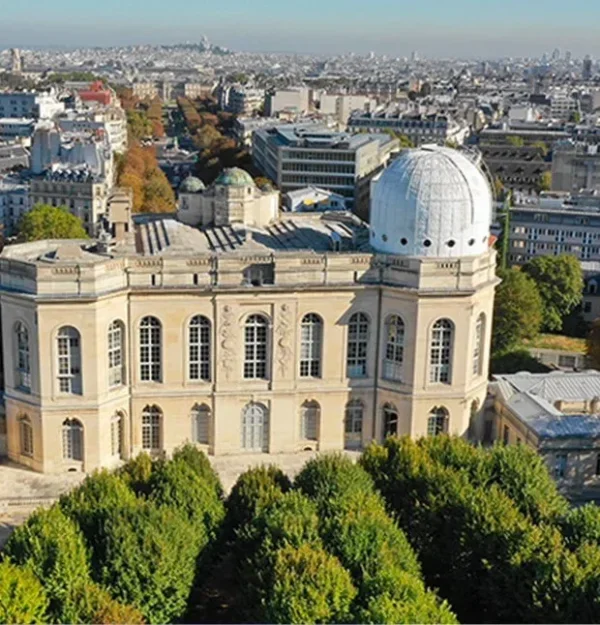
Paris site
LIRA
Observatoire de Paris
77, Avenue Denfert-Rochereau
75014 Paris
Cergy site
LIRA - Site de Neuville II
UFR Sciences et Techniques - Département de physique
5, mail Gay Lussac
95000 Neuville-sur-Oise